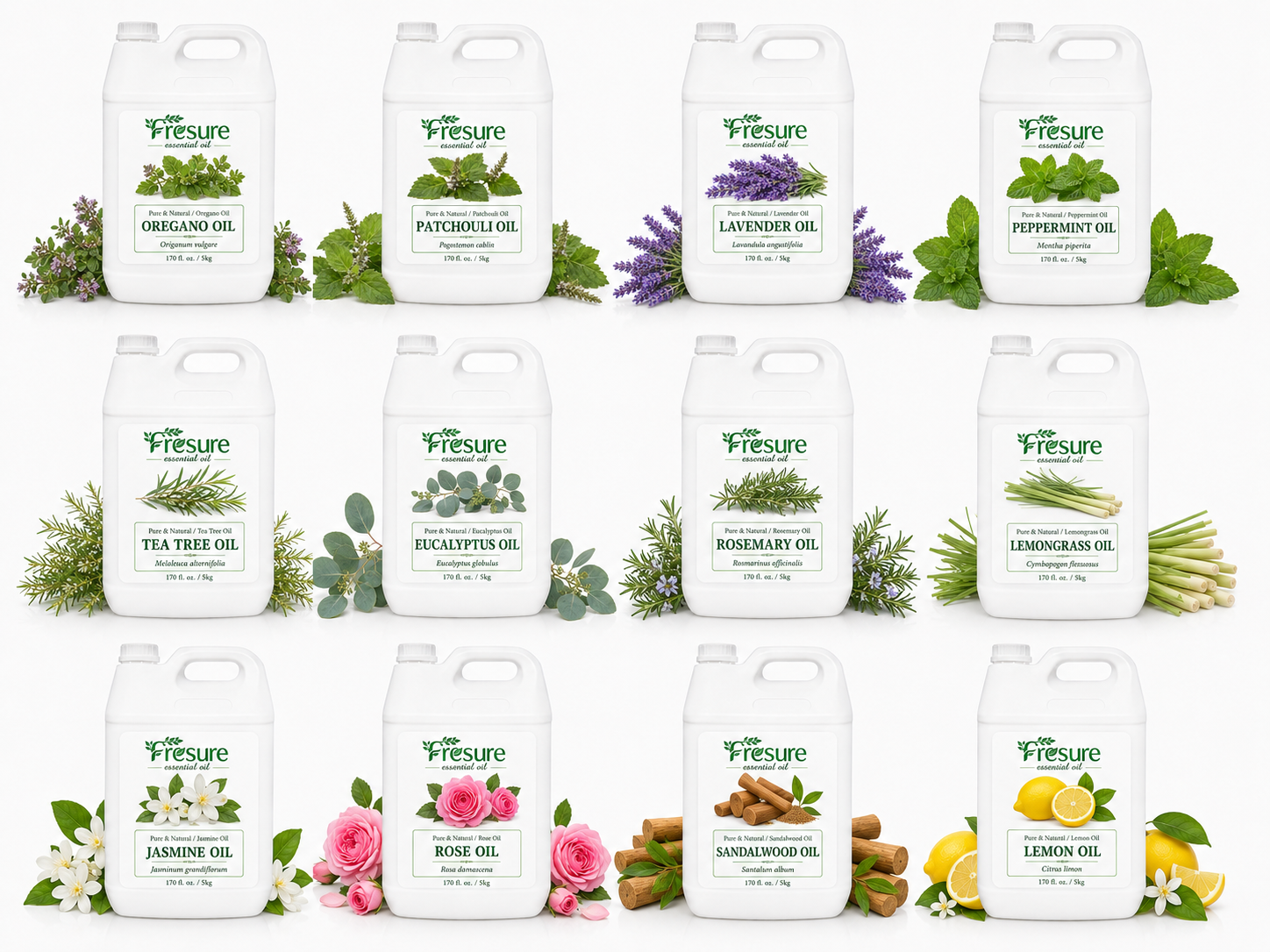
Lemon
Whitening, astringent, regulates sebum production
Lemon essential oil is cold-pressed from the fresh peel of Citrus limon (L.) Burm. f., a fruit believed to have originated in northeastern India and northern Myanmar before spreading to the Mediterranean via Arab traders in the 10th century. Today, Argentina is the world's largest lemon oil producer, with Italy (Sicily and Calabria) producing the most esteemed quality for perfumery. Our lemon oil is sourced from Argentine producers who supply the global flavor and fragrance industry. The oil is composed of >90% monoterpene hydrocarbons, predominantly d-limonene, with citral (geranial + neral) providing the characteristic lemon character at 2–5%. Lemon oil is phototoxic due to its furocoumarin content; we supply both cold-pressed (standard) and furocoumarin-free (FCF, steam-distilled) grades for applications requiring non-phototoxic citrus oils.
| Botanical Name | Citrus limon (L.) Osbeck |
|---|---|
| Other Names | Lemon, Limone |
| Country of Origin | Italy, Spain, Argentina, USA (California) |
| Plant Family | Rutaceae |
| Parts Used | Fruit peel |
| Extraction Method | Cold Pressing |
| CAS Number | 8008-56-8 |
| Color / Appearance | Pale yellow to greenish yellow |
| Odor | Fresh, clean, sharp citrus with a bright, zesty character typical of lemon peel |
| Specific Gravity | 0.850 - 0.858 (20 C) |
| Refractive Index | 1.474 - 1.478 (20 C) |
| Optical Rotation | +57 deg to +66 deg (20 C) |
| Flash Point | 46#176C |
| Solubility | Soluble in ethanol (with turbidity), fixed oils |
| Major Constituents | Limonene, citral, etc. |
Whitening, astringent, regulates sebum production
Limonene, citral, etc.
The world's most important citrus flavor. Used in soft drinks (lemonades, colas), alcoholic beverages (limoncello, cocktails), confectionery, baked goods, dairy products, and culinary applications. Cold-pressed oil provides the authentic, full-spectrum lemon character that synthetic citral and limonene cannot replicate.
A ubiquitous top note in fine perfumery, particularly in eau de cologne and citrus-fresh compositions. Also heavily used in functional fragrances—household cleaners, air fresheners, dishwashing liquids, and laundry products—where the association of lemon scent with cleanliness drives consumer preference.
Incorporated into clarifying and brightening skincare formulations, astringent toners, and anti-acne products. Rich in the antioxidant d-limonene. NOTE: Cold-pressed lemon oil is phototoxic; products intended for leave-on daytime use should use FCF (furocoumarin-free) grade or be limited to rinse-off applications.
d-Limonene, the major constituent of lemon oil, is a powerful natural solvent and degreaser. Lemon oil and its isolated terpenes are used in industrial degreasers, graffiti removers, adhesive removers, and environmentally preferred cleaning solvents. d-Limonene is readily biodegradable and classified as a non-VOC in many jurisdictions.
Eucalyptus, Fennel, Frankincense, Geranium, Juniper, Lavender, Neroli, Sandalwood, Tea Tree, Ylang Ylang — the universal citrus top note that brightens any blend
Lemon — Argentina
Custom packaging and private labeling available upon request.
Store in tightly sealed, full containers in a cool (ideally <15°C), dark place. Shelf life: 1–2 years. Limonene oxidizes readily on exposure to air, forming sensitizing oxidation products (limonene hydroperoxides). Nitrogen-blanketed headspace extends shelf life significantly. Avoid prolonged storage in HDPE containers, which are permeable to oxygen.
Under recommended storage conditions — tightly sealed in a cool, dry environment away from direct sunlight — Lemon Oil remains stable for 2 to 3 years. Monitor for any changes in aroma, color, or viscosity before use in production batches.
Lemon Oil is cold pressing from the fruit peel of a plant in the Rutaceae family. This method preserves the full spectrum of volatile aromatic compounds and bioactive constituents that define the oil''s therapeutic and sensory profile.
Every shipment includes a Certificate of Analysis (COA) detailing the batch-specific chemical profile (GC/MS or GC-FID), physical parameters (specific gravity, refractive index, optical rotation), and organoleptic assessment. Material Safety Data Sheet (MSDS/SDS) is also provided. Additional documentation — including GC/MS chromatograms, pesticide residue analysis, heavy metal testing, and allergen statements — is available upon request.
Standard MOQ is 1 kg for most essential oils, with bulk pricing available at 5 kg, 25 kg, and 180 kg drum quantities. Contact our sales team for current pricing and availability for your required volume.
Yes. We provide complimentary 10–30 mL samples of most products for qualified B2B buyers to evaluate quality, aroma, and suitability before placing bulk orders. Sample requests are subject to availability and shipping costs may apply. Request a sample through our contact form.
Contact our team for pricing, samples, and technical documentation. We respond to all B2B inquiries within 24 hours.