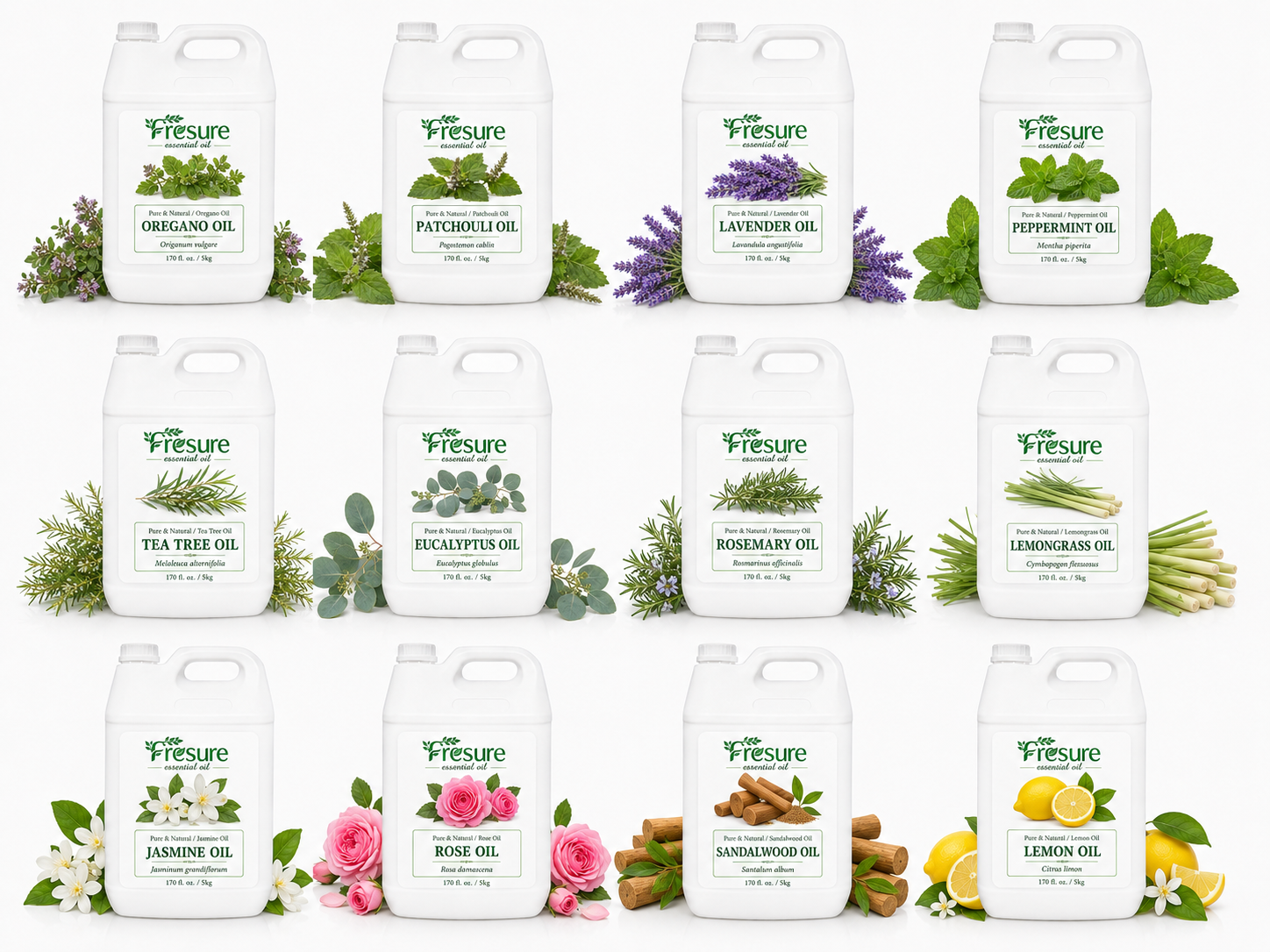
Lemongrass
B2B ingredient for professional formulation evaluation.
Lemongrass oil is steam-distilled from the fresh or partially dried leaves of Cymbopogon citratus (West Indian lemongrass) and Cymbopogon flexuosus (East Indian lemongrass), fast-growing perennial grasses cultivated throughout tropical Asia, Africa, and the Americas. The oil is dominated by citral (65–85%) — a mixture of the isomeric aldehydes geranial (citral A) and neral (citral B) — which gives lemongrass its characteristic intense lemon-like, green-herbaceous aroma. Citral is one of the most important aroma chemicals in the flavor and fragrance industry, serving as both a direct fragrance ingredient and as a starting material for the synthesis of ionones (violet odorants), vitamin A, and other high-value products. Our lemongrass oil is sourced from both India and China.
| Botanical Name | Cymbopogon flexuosus (Nees ex Steud.) W.Watson / Cymbopogon citratus (DC.) Stapf |
|---|---|
| Other Names | Lemongrass, Citronella Grass, Fever Grass, Xiang Mao |
| Country of Origin | India, Sri Lanka, Guatemala, China (Yunnan) |
| Plant Family | Poaceae |
| Parts Used | Stems and leaves |
| Extraction Method | Steam Distillation |
| CAS Number | 8007-02-1 |
| Color / Appearance | Yellow to amber to reddish brown |
| Odor | Strong, fresh, lemon-like, grassy-herbaceous with a light rosy undertone |
| Specific Gravity | 0.872 - 0.905 (20 C) |
| Refractive Index | 1.483 - 1.489 (20 C) |
| Optical Rotation | -3 deg to +1 deg |
| Flash Point | 71#176C |
| Solubility | Soluble in ethanol, fixed oils; slightly soluble in propylene glycol |
| Major Constituents | Citral, myrcene, etc. |
For professional formulation evaluation. Suitability, permitted use level, labeling, and regulatory status must be assessed for the intended market and application.
Citral, myrcene, etc.
Lemongrass oil is widely used as a natural flavoring in Asian cuisines (particularly Thai, Vietnamese, and Indonesian), where it imparts the characteristic lemon-herbaceous flavor to soups (tom yum), curries, stir-fries, and marinades. Also used in beverages (herbal teas, citrus-based soft drinks), confectionery, and baked goods. Citral, the major constituent, is an important flavor chemical in its own right, used across a wide range of fruit and citrus flavor profiles.
For professional formulation evaluation. Suitability, permitted use level, labeling, and regulatory status must be assessed for the intended market and application.
Citral isolated from lemongrass oil is a critical raw material for the synthesis of α-ionone and β-ionone (violet/floral aroma chemicals used in fine fragrance and flavoring), vitamins A and E (via the isoprene building block isoprene itself is derived from citral in some industrial processes), and other high-value terpenoid derivatives. Lemongrass is one of the most important 'commodity' essential oils serving the aroma chemical industry.
For professional formulation evaluation. Suitability, permitted use level, labeling, and regulatory status must be assessed for the intended market and application.
| Variant | Origin |
|---|---|
| Lemongrass | China |
| Lemongrass | India |
Custom packaging and private labeling available upon request.
Store in tightly sealed containers in a cool environment. Shelf life: 1–2 years. Citral is susceptible to acid-catalyzed cyclization and oxidation; protect from air, moisture, and elevated temperatures. The oil may develop a darker color and a less 'clean' aroma upon degradation. Nitrogen-blanketed headspace recommended for bulk storage.
Under recommended storage conditions — tightly sealed in a cool, dry environment away from direct sunlight — Lemongrass Oil remains stable for 2 to 3 years. Monitor for any changes in aroma, color, or viscosity before use in production batches.
Lemongrass Oil is steam distillation from the stems and leaves of a plant in the Poaceae family.
Every shipment includes a Certificate of Analysis (COA) detailing the batch-specific chemical profile (GC/MS or GC-FID), physical parameters (specific gravity, refractive index, optical rotation), and organoleptic assessment. Material Safety Data Sheet (MSDS/SDS) is also provided. Additional documentation — including GC/MS chromatograms, pesticide residue analysis, heavy metal testing, and allergen statements — is available upon request.
Standard MOQ is 1 kg for most essential oils, with bulk pricing available at 5 kg, 25 kg, and 180 kg drum quantities. Contact our sales team for current pricing and availability for your required volume.
Yes. We provide complimentary 10–30 mL samples of most products for qualified B2B buyers to evaluate quality, aroma, and suitability before placing bulk orders. Sample requests are subject to availability and shipping costs may apply. Request a sample through our contact form.
Contact our team for pricing, samples, and technical documentation. We respond to all B2B inquiries within 24 hours.