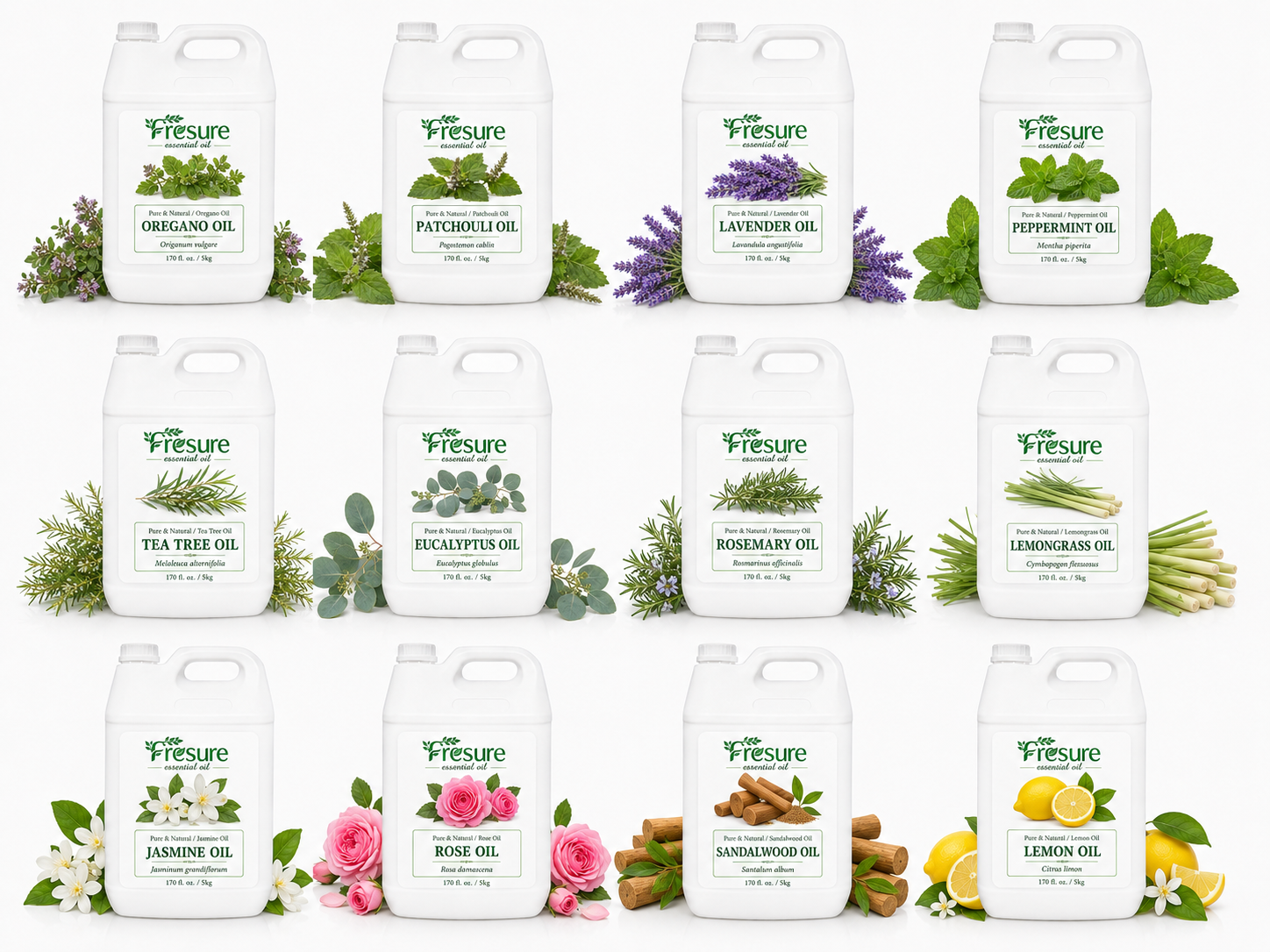
Sandalwood
B2B ingredient for professional formulation evaluation.
Indian sandalwood (Santalum album) oil is one of the most precious and historically significant essential oils in the world, with a documented history of use spanning over 4,000 years in Ayurvedic medicine, Hindu and Buddhist ritual, and traditional perfumery. The oil is steam-distilled from the heartwood and roots of mature sandalwood trees, which must be at least 30-40 years old to produce commercially viable oil, though the highest quality oil comes from trees aged 60-80 years. The oil is defined by its α-santalol and β-santalol content (together constituting >90% of the oil in highest-quality material), which give sandalwood its characteristic creamy, persistent, woody-sweet aroma. Due to over-harvesting and illegal logging, S. album is classified as Vulnerable by the IUCN; India has implemented strict plantation and export controls. Our sandalwood oil comes from legally harvested, government-regulated plantation sources in India, fully documented with CITES and regulatory paperwork. We also offer Australian sandalwood (Santalum spicatum) from sustainable plantation sources in Western Australia, distinguished by its drier, sharper, more terpenic character and higher α-bisabolol content.
| Botanical Name | Santalum album L. |
|---|---|
| Other Names | East Indian Sandalwood, White Sandalwood, Tan Xiang |
| Country of Origin | India (Karnataka, Tamil Nadu), Australia |
| Plant Family | Santalaceae |
| Parts Used | Heartwood |
| Extraction Method | Steam Distillation |
| CAS Number | 8006-87-9 |
| Color / Appearance | Pale yellow to golden yellow, viscous |
| Odor | Rich, sweet, warm, woody-balsamic, extremely tenacious and long-lasting |
| Specific Gravity | 0.968 - 0.983 (20 C) |
| Refractive Index | 1.503 - 1.510 (20 C) |
| Optical Rotation | -15 deg to -20 deg (20 C) |
| Flash Point | > 100#176C |
| Solubility | Soluble in ethanol, fixed oils; slightly soluble in propylene glycol |
| Major Constituents | Santalene, santalol, santalone |
For professional formulation evaluation. Suitability, permitted use level, labeling, and regulatory status must be assessed for the intended market and application.
Santalene, santalol, santalone
One of the most treasured base notes in perfumery, providing the backbone of countless oriental, woody, floriental, and chypre compositions. Sandalwood's extraordinary tenacity and radiance, combined with its ability to harmonize and exalt other ingredients, make it irreplaceable in prestige perfumery. It functions simultaneously as a fixative, a modifier, and a distinct fragrance material. The heartwood yields are diminishing; synthetic santalol replacements (Sandalore, Javanol, Ebanol, Polysantol) now dominate commercial perfumery, but genuine sandalwood remains essential for premium and natural perfumery segments.
For professional formulation evaluation. Suitability, permitted use level, labeling, and regulatory status must be assessed for the intended market and application.
The pre-eminent oil for meditation, contemplation, and spiritual practice across multiple traditions. Sandalwood paste and oil are used in Hindu puja (worship) ceremonies and Buddhist meditation; the aroma is believed to calm the mind, deepen concentration, and facilitate the transition from ordinary awareness to meditative states. Diffused or worn as a personal fragrance oil (attar-style, diluted in jojoba or fractionated coconut oil), it provides a long-lasting, grounding scent that many find conducive to mindfulness practice.
Sandalwood powder is the primary base for Indian agarbatti (incense sticks), which represent the largest consumption of sandalwood globally by volume. The essential oil is used in luxury incense, scented candles, and reed diffusers. Its slow, even burn rate and tenacious aroma make it ideal for incense applications. The spent distillation powder (sandalwood chips after oil extraction) retains residual fragrance and is used in economy incense and potpourri.
Bergamot, Black Pepper, Cedarwood, Frankincense, Geranium, Jasmine, Lavender, Myrrh, Neroli, Patchouli, Rose, Vetiver, Ylang Ylang — blends beautifully with virtually every oil, lending depth, fixation, and the incomparable sandalwood creaminess
Sandalwood — India
Custom packaging and private labeling available upon request.
Store in tightly sealed, full containers in a cool, dark environment. Shelf life: 8–10+ years. Sandalwood oil is extraordinarily stable and, like fine wine, improves with extended aging — α-santalol slowly transforms into epi-α-santalol and other rearrangement products, deepening and mellowing the aroma. Store in glass or aluminum; avoid plastic for long-term storage due to the oil's solvent properties and high value.
Under recommended storage conditions — tightly sealed in a cool, dry environment away from direct sunlight — Sandalwood Oil remains stable for 2 to 3 years. Monitor for any changes in aroma, color, or viscosity before use in production batches.
Sandalwood Oil is steam distillation from the heartwood of a plant in the Santalaceae family.
Every shipment includes a Certificate of Analysis (COA) detailing the batch-specific chemical profile (GC/MS or GC-FID), physical parameters (specific gravity, refractive index, optical rotation), and organoleptic assessment. Material Safety Data Sheet (MSDS/SDS) is also provided. Additional documentation — including GC/MS chromatograms, pesticide residue analysis, heavy metal testing, and allergen statements — is available upon request.
Standard MOQ is 1 kg for most essential oils, with bulk pricing available at 5 kg, 25 kg, and 180 kg drum quantities. Contact our sales team for current pricing and availability for your required volume.
Yes. We provide complimentary 10–30 mL samples of most products for qualified B2B buyers to evaluate quality, aroma, and suitability before placing bulk orders. Sample requests are subject to availability and shipping costs may apply. Request a sample through our contact form.
Contact our team for pricing, samples, and technical documentation. We respond to all B2B inquiries within 24 hours.