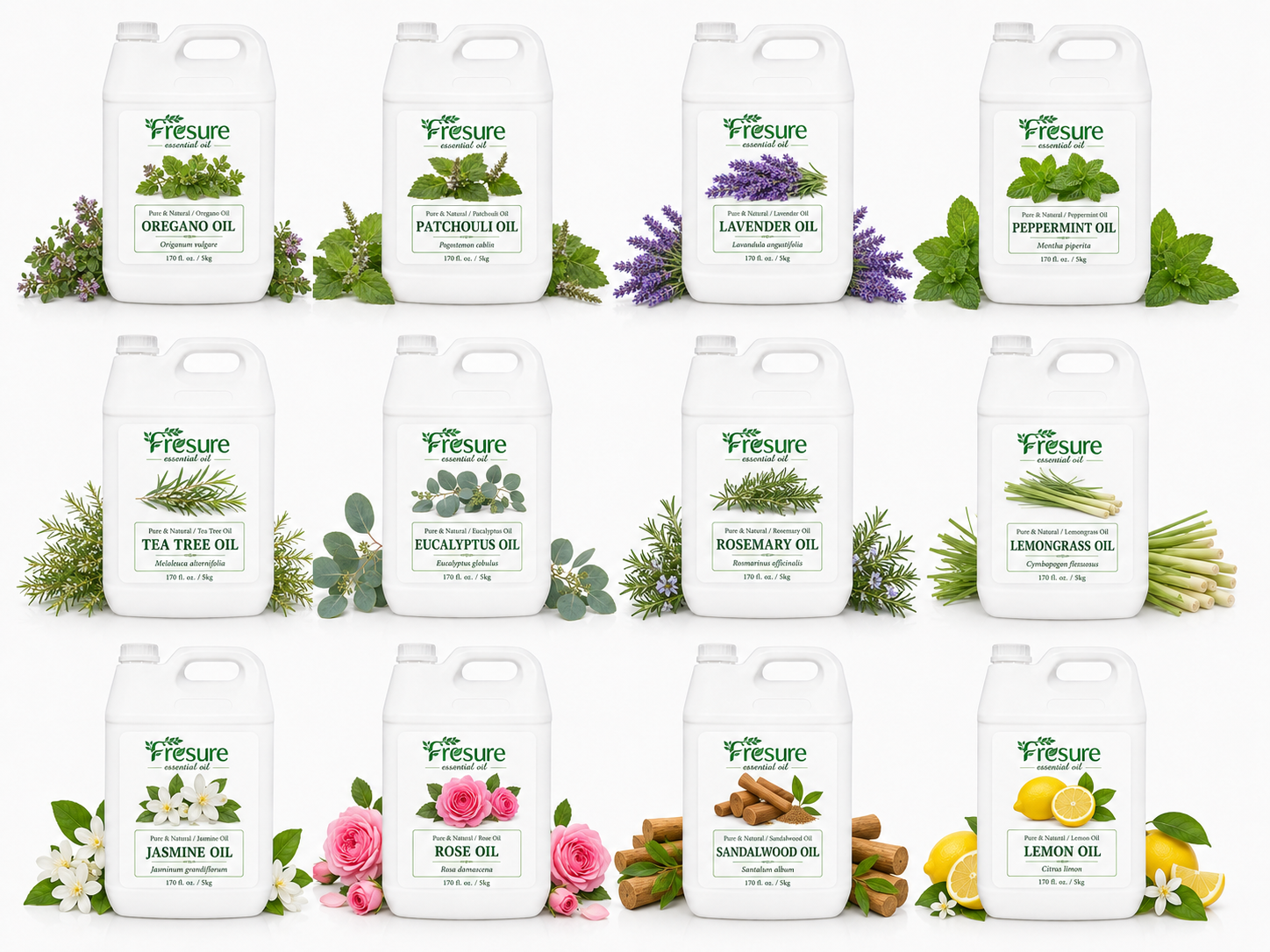
Oregano
B2B ingredient for professional formulation evaluation.
Oregano oil is steam-distilled from the flowering tops and leaves of Origanum vulgare, a hardy perennial herb native to the Mediterranean. The oil is produced from carefully selected oregano grown under Good Agricultural Practice (GAP), harvested at full bloom when carvacrol levels peak, and immediately distilled to preserve the full spectrum of bioactive constituents. Fresure supplies oregano oil in bulk quantities with batch-specific Certificate of Analysis (COA) verifying carvacrol percentage, p-cymene ratio, and physical parameters — essential documentation for formulators in the animal feed, natural preservative, and pharmaceutical sectors.
| Botanical Name | Origanum vulgare L. |
|---|---|
| Other Names | Oregano, Wild Marjoram, Greek Oregano, Common Oregano, Niu Zhi |
| Country of Origin | Mediterranean region (Turkey, Greece, Italy); cultivated in China |
| Plant Family | Lamiaceae |
| Parts Used | Flowering tops and leaves |
| Extraction Method | Steam Distillation |
| CAS Number | 8007-11-2 |
| Color / Appearance | Pale yellow to reddish brown, darkens with age |
| Odor | Strong, spicy-herbaceous, warm phenolic with a characteristic carvacrol-rich medicinal and slightly camphoraceous note |
| Specific Gravity | 0.930 - 0.956 (20 deg C) |
| Refractive Index | 1.500 - 1.512 (20 deg C) |
| Optical Rotation | -2 deg to +3 deg (20 deg C) |
| Flash Point | ~ |
| Solubility | Slightly soluble in water; soluble in ethanol, organic solvents, and fixed oils |
| Major Constituents | Carvacrol (55-85%), thymol (2-15%), p-cymene, gamma-terpinene, beta-caryophyllene, linalool, alpha-pinene, myrcene |
For professional formulation evaluation. Suitability, permitted use level, labeling, and regulatory status must be assessed for the intended market and application.
Carvacrol (55-85%), thymol (2-15%), p-cymene, gamma-terpinene, beta-caryophyllene, linalool, alpha-pinene, myrcene
A leading natural antibiotic alternative in poultry, swine, and ruminant feed. Carvacrol-rich oregano oil improves gut health, inhibits pathogenic bacteria (E. coli, Salmonella, Clostridium), enhances feed conversion ratio, and reduces reliance on AGPs (antibiotic growth promoters). Used in premixes, drinking water additives, and feed formulations.
For professional formulation evaluation. Suitability, permitted use level, labeling, and regulatory status must be assessed for the intended market and application.
For professional formulation evaluation. Suitability, permitted use level, labeling, and regulatory status must be assessed for the intended market and application.
For professional formulation evaluation. Suitability, permitted use level, labeling, and regulatory status must be assessed for the intended market and application.
For professional formulation evaluation. Suitability, permitted use level, labeling, and regulatory status must be assessed for the intended market and application.
For professional formulation evaluation. Suitability, permitted use level, labeling, and regulatory status must be assessed for the intended market and application.
Thyme, Rosemary, Lavender, Eucalyptus, Tea Tree, Peppermint, Cinnamon, Clove, Lemongrass, Basil, Bergamot
| Variant | Origin |
|---|---|
| Oregano (60% Carvacrol) | Turkey / China |
| Oregano (70% Carvacrol) | Turkey / Greece |
| Oregano (80%+ Carvacrol) | Mediterranean |
Custom packaging and private labeling available upon request.
Store in tightly sealed, full containers in a cool, dry place away from direct sunlight. Carvacrol-rich oils oxidize over time; minimize headspace to preserve phenolic content. Shelf life: 2-3 years under recommended conditions. Monitor carvacrol percentage and specific gravity at 6-month intervals for quality assurance.
Under recommended storage conditions — tightly sealed in a cool, dry environment away from direct sunlight — Oregano Oil remains stable for 2 to 3 years. Monitor for any changes in aroma, color, or viscosity before use in production batches.
Oregano Oil is steam distillation from the flowering tops and leaves of a plant in the Lamiaceae family.
Every shipment includes a Certificate of Analysis (COA) detailing the batch-specific chemical profile (GC/MS or GC-FID), physical parameters (specific gravity, refractive index, optical rotation), and organoleptic assessment. Material Safety Data Sheet (MSDS/SDS) is also provided. Additional documentation — including GC/MS chromatograms, pesticide residue analysis, heavy metal testing, and allergen statements — is available upon request.
Standard MOQ is 1 kg for most essential oils, with bulk pricing available at 5 kg, 25 kg, and 180 kg drum quantities. Contact our sales team for current pricing and availability for your required volume.
Yes. We provide complimentary 10–30 mL samples of most products for qualified B2B buyers to evaluate quality, aroma, and suitability before placing bulk orders. Sample requests are subject to availability and shipping costs may apply. Request a sample through our contact form.
Contact our team for pricing, samples, and technical documentation. We respond to all B2B inquiries within 24 hours.