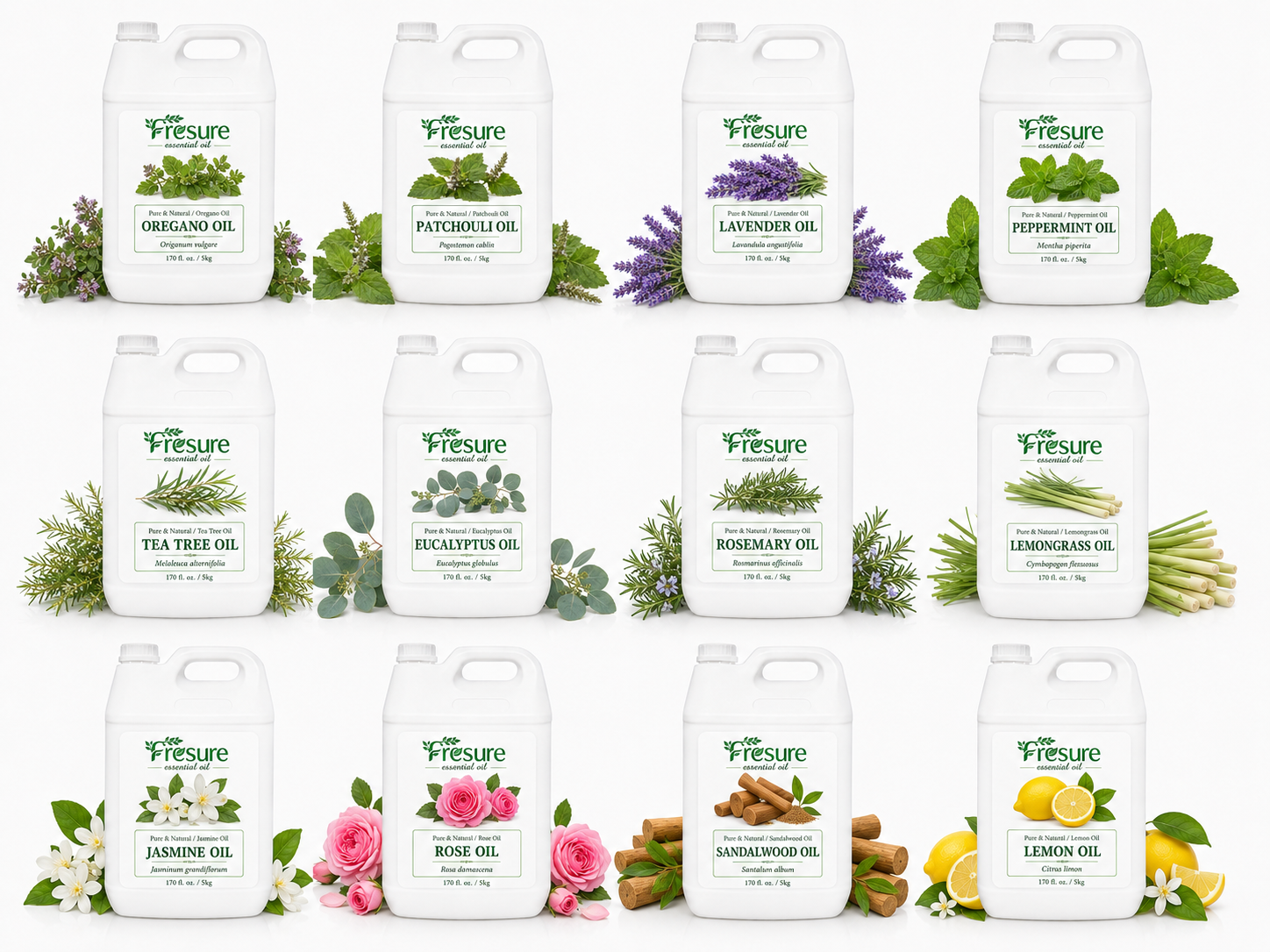
Rose
Breaks down pigmentation, anti-aging, anti-wrinkle
Rose oil (Rose Otto) is arguably the most precious and romantic of all essential oils, produced by steam-distillation of the fresh petals of Rosa damascena Mill., the Damask rose, cultivated most famously in the Rose Valley of Bulgaria (Kazanlak region) and the highlands of Turkey (Isparta), with significant production also from Iran, Morocco, India, and, increasingly, China. The production of 1 kg of rose otto requires approximately 3,000–5,000 kg of hand-picked rose petals (roughly 1 hectare of plantation), harvested before dawn when the essential oil content peaks. The oil is defined by its exquisite balance of citronellol (30–40%), geraniol (15–20%), nerol (5–10%), and the trace rose oxides and β-damascenone that collectively create the characteristic rose aroma. At room temperature, rose otto is a pale olive-yellow liquid; below approximately 20°C, the stearoptene fraction (odorless paraffin waxes, primarily nonadecane and heneicosane) precipitates as whitish crystals — this is normal and a positive indicator of authenticity rather than a defect. Our rose oil is sourced from Damask rose plantations in China (Yunnan and Xinjiang provinces), offering a competitive price point for a high-cost material without compromising on the essential character of authentic rose otto. We also offer rose absolute (solvent-extracted) for perfumery applications where maximum tenacity and full-spectrum aroma are required.
| Botanical Name | Rosa damascena Mill. / Rosa centifolia L. |
|---|---|
| Other Names | Damask Rose, Bulgarian Rose, Rose Otto, Mei Gui |
| Country of Origin | Bulgaria (Kazanlak Valley), Turkey, Iran, Morocco |
| Plant Family | Rosaceae |
| Parts Used | Flowers |
| Extraction Method | Steam Distillation |
| CAS Number | 8007-01-0 |
| Color / Appearance | Pale yellow to orange, sometimes greenish |
| Odor | Rich, deep, warm floral-rose with a honey-like sweetness and slightly spicy note |
| Specific Gravity | 0.848 - 0.880 (20 C) |
| Refractive Index | 1.452 - 1.466 (20 C) |
| Optical Rotation | -1 deg to -4 deg (20 C) |
| Flash Point | > 100#176C |
| Solubility | Soluble in ethanol, fixed oils; slightly soluble in propylene glycol |
| Major Constituents | Linalool, linalyl formate, β-citronellol |
Breaks down pigmentation, anti-aging, anti-wrinkle
Linalool, linalyl formate, β-citronellol
An irreplaceable ingredient in haute parfumerie, forming the heart of countless floral, floriental, chypre, and oriental compositions. The world's most famous perfumes, from Chanel No. 5 to Joy by Jean Patou, are built around rose. Natural rose oil provides a warmth, depth, and diffusion that even the most sophisticated synthetic rose reconstitutions cannot fully replicate. Rose absolute and rose otto are used in complementary fashion — the otto for its bright, honeyed top and heart, the absolute for its richer, deeper, more tenacious dry-down. Both are essential materials in any perfumer's organ.
For professional formulation evaluation. Suitability, permitted use level, labeling, and regulatory status must be assessed for the intended market and application.
Universally associated with love, comfort, and emotional healing. Rose oil is used in aromatherapy for grief, heartbreak, anxiety, depression, and emotional trauma — it is considered perhaps the most emotionally powerful of all essential oils. Its profound psychological effects are supported by a growing body of evidence on the olfactory-limbic connection. Diluted to 1% in jojoba oil and worn as a personal fragrance or used in an aromatherapy inhaler, rose oil provides a portable anchor of calm and self-compassion throughout the day.
Bergamot, Chamomile, Clary Sage, Frankincense, Geranium, Jasmine, Lavender, Neroli, Palmarosa, Patchouli, Sandalwood, Ylang Ylang — the queen of floral oils, exalting and harmonizing with virtually every other oil, giving any blend a sense of luxury and completeness
Rose — 中国、大马士革
Custom packaging and private labeling available upon request.
Store in tightly sealed, full containers in a cool (<20°C), dark environment. Shelf life: 3–5 years. The monoterpene alcohols (citronellol, geraniol) are relatively stable; oxidation is the primary degradation pathway. Stearoptene crystallization is normal — gently warm bottle in hand or at 30°C water bath, then agitate before use. Rose otto should be stored in glass or aluminum; avoid HDPE for long-term storage due to permeation and sorption concerns.
Under recommended storage conditions — tightly sealed in a cool, dry environment away from direct sunlight — Rose Oil remains stable for 2 to 3 years. Monitor for any changes in aroma, color, or viscosity before use in production batches.
Rose Oil is steam distillation from the flowers of a plant in the Rosaceae family.
Every shipment includes a Certificate of Analysis (COA) detailing the batch-specific chemical profile (GC/MS or GC-FID), physical parameters (specific gravity, refractive index, optical rotation), and organoleptic assessment. Material Safety Data Sheet (MSDS/SDS) is also provided. Additional documentation — including GC/MS chromatograms, pesticide residue analysis, heavy metal testing, and allergen statements — is available upon request.
Standard MOQ is 1 kg for most essential oils, with bulk pricing available at 5 kg, 25 kg, and 180 kg drum quantities. Contact our sales team for current pricing and availability for your required volume.
Yes. We provide complimentary 10–30 mL samples of most products for qualified B2B buyers to evaluate quality, aroma, and suitability before placing bulk orders. Sample requests are subject to availability and shipping costs may apply. Request a sample through our contact form.
Contact our team for pricing, samples, and technical documentation. We respond to all B2B inquiries within 24 hours.